
FERTILIZER and Pesticide Use

What does fertilizer do to our freshwater systems?
Lawn fertilizers are made up of nutrients including nitrogen, phosphorus and ammonia. After spraying, any nutrients the plant and soil cannot absorb will runoff with stormwater during the next rainfall. These nutrients will then enter water bodies and feed the growth of weeds and algae. Once algae blooms, it depletes oxygen from aquatic ecosystems, creating dead zones where fish and other species cannot survive.
What Can you Do?
Save money and test soil first to determine if and what nutrients are needed. You can download soil testing instructions and an information sheet below.
Don’t let fertilizer drop on the driveway or sidewalk. If it does, sweep up any extra and place it back in the bag. If left on the pavement, the next rain shower will carry it into our rivers, streams and lakes.
Fall is the best time to fertilize! It aids with soil nutrient retention and helps plants prepare for winter dormancy.
Use lawn clippings instead! Made of Phosphorus and Nitrogen, grass clippings are a free alternative to fertilizer that also prevents the clippings from becoming stormwater pollution. Mow your lawn at a high blade setting so the longer blades will capture clippings. The shorter clippings will hold moisture, protecting your grass from losing moisture and drying in the sun.
How Do Pesticides Impact our freshwater systems?
Pesticides should be used as a last result as they can have detrimental impacts on the environment, wildlife, and human health. If you decide to apply pesticides, please do so with caution. There are three different types of pesticides: herbicides, insecticides and fungicides. Be sure to use protective gear and follow the directions as listed on the label. If done incorrectly, pesticides can find their way into our local rivers and lakes. Pesticides negatively impact aquatic ecosystems by harming the health of aquatic life and disrupting the food chain. If you must use pesticides, be sure to use these chemicals responsibly.
What Can you Do?
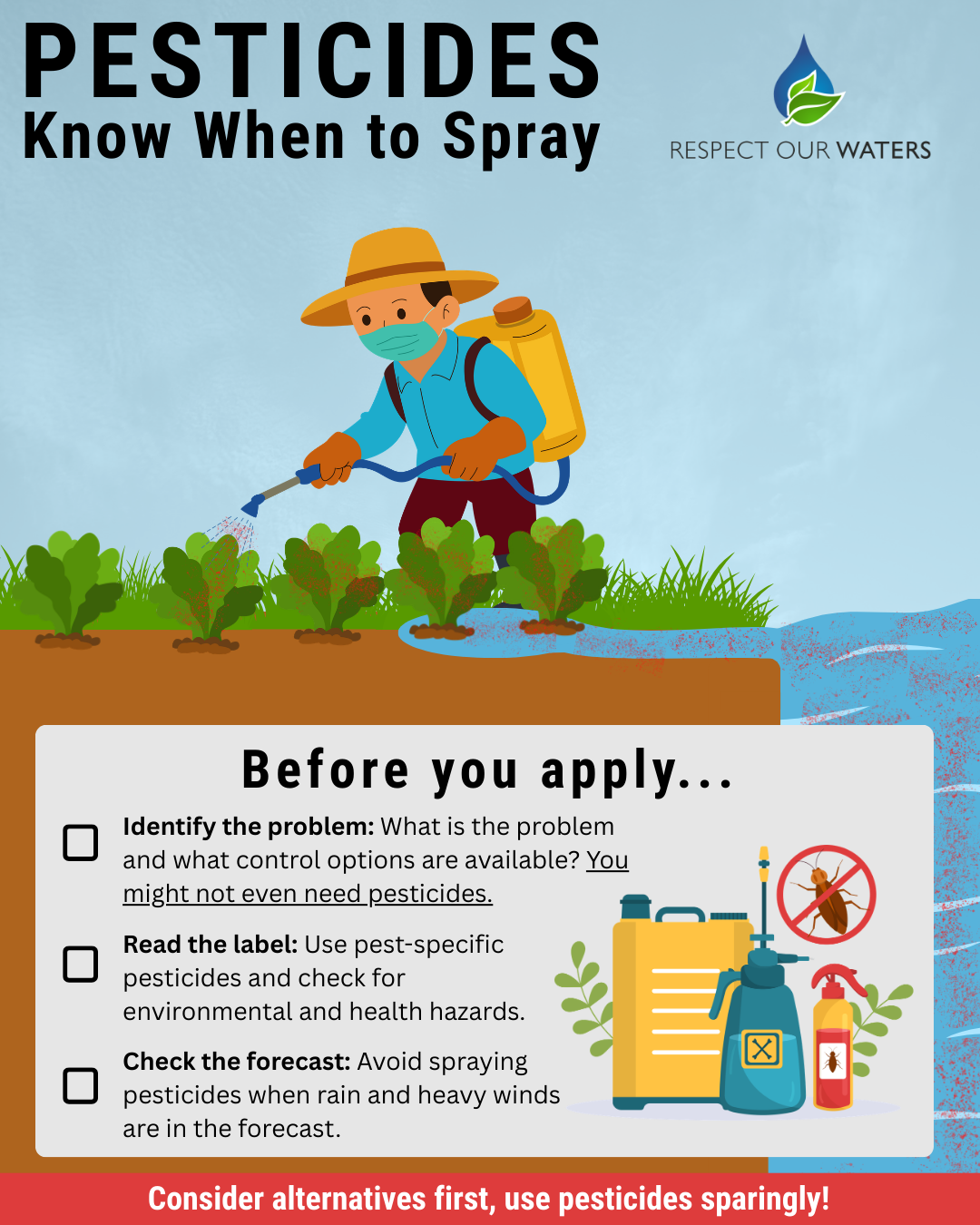
Try pest management alternatives before using pesticides. Some alternatives include prevention maintenance, biological controls, encouraging natural enemies, and allowing some weeds and insects to survive. Remember that eliminating 100% of pests does not equal a healthy garden.
Carefully read the label. Use pest-specific pesticides instead of broad-spectrum pesticides. This helps avoid harming non-target plants, insects, and animals. Make sure that the pesticide you are getting is effective against your specific pest, will control it at the right stage (adult vs larva), and that it’s appropriate for your plants.
Look for any additional information regarding environmental and health hazards. Follow instructions carefully. Only use the indicated amount and never mix other compounds unless the label says otherwise.
Check the forecast before using. Do NOT apply pesticides on days with high wind or within 24 hours before forecasted rain. Wind and runoff can carry pesticides into our local waterways.
Spot spray weeds instead of treating your entire lawn. Do NOT apply pesticides on paved surfaces or near storm drains, and do NOT water your plants after applying pesticides.
If you have leftover pesticides, store them in a locked cabinet in the original container, or as directed by the label. Do NOT pour left over garden chemicals into storm drains, sinks, or toilets as it pollutes water and is illegal!